

The vines never quit. A handful became a colander. Then a mixing bowl. Now the Sun Golds you doted on in June feel like homework.
Don’t cook. Don’t can. Don’t toss. Pickle!
There’s one step that keeps them snappy instead of soggy. We’ll hit it in a minute. First, a promise. Load a jar tonight and you’ll have bright, spoonable tomatoes tomorrow. With actual flavor.
TL;DR
- Use a 1:1 ratio of 5% acidity vinegar to water for a safe, zingy brine. See a research-backed quick-pickle baseline here: Emerging Investigators.
- Non-negotiable: pierce each tomato skin with a skewer, needle, or tip of a paring knife so the brine can get in. Lakewinds’ recipe has this step too (Lakewinds Co-op).
- Wait 8–24 hours to eat; 48 hours is the sweet spot for texture and flavor equilibrium (Emerging Investigators).
- Fridge only. These are not canned or shelf-stable.
Keep reading if you want a clean snap, not slumped skins. The step most folks skip is below.
The Secret to Not Making Tomato Soup
Cherry tomatoes act like tiny water balloons. Thin skins. Lots of juice. One hot pour and you get red bathwater with skins drifting like confetti.
The fix is simple. It’s the difference between “neat” and “make another jar.”
Why you must pierce the skin
Think of the skin like a raincoat. Brine hits, then slides off. Without a breach, acid stays outside, the center stays bland, and pressure builds until a few explode.
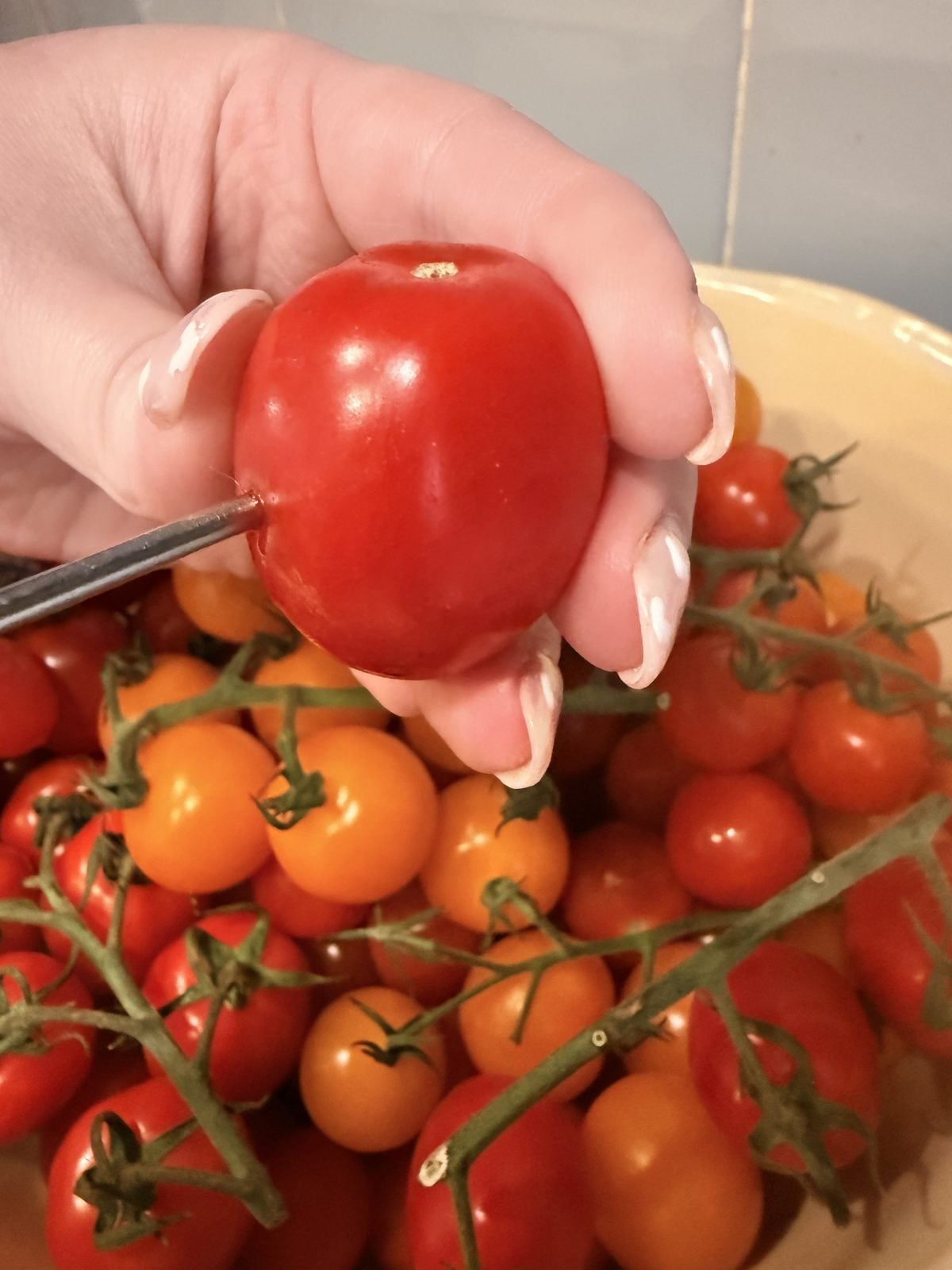
Prick each tomato once. Twice if they’re extra firm. Use a wooden skewer, needle, or the tip of a paring knife. Aim for the stem end or the belly. You’re making a door.
Food-safety summaries point out that contact time is only useful when brine actually reaches the interior flesh (Emerging Investigators).
No hole, no flavor.
Hot brine or warm brine? The mush debate
Here’s where recipes split.
- Some bring brine to a boil and pour hot for speed. Heartbeet Kitchen’s quick pickles use a hot brine and head straight to the fridge (Heartbeet Kitchen).
- Others heat to dissolve salt and sugar, then cool before pouring to protect texture. Lakewinds boils to dissolve, then cools before filling jars (Lakewinds Co-op).
My take after too many split Sun Golds: on thin-skinned types like Sun Gold or Sweet 100, warm brine around 140–160°F hits the sweet spot. Quick penetration, no parboil.
Thicker-walled grape tomatoes handle room temp to warm just fine, and you can give them more fridge time.
Both approaches work. Different skins, different tolerance. If you’re unsure what you’ve got, go warm and wait an extra day
We’ll turn that into steps in a second. First, nail the brine.
The Safe, Snappy Brine
You’re not canning. Acid does the work here of keeping your food safe, so you need the right vinegar.
- Baseline: 1:1 vinegar to water with 5% acidity vinegar. That keeps the pH strongly acidic, safer, and bright enough for a quick pickle (Emerging Investigators).
- Want it punchier? Go 3:2, vinegar to water. I do this for very sweet fruit.
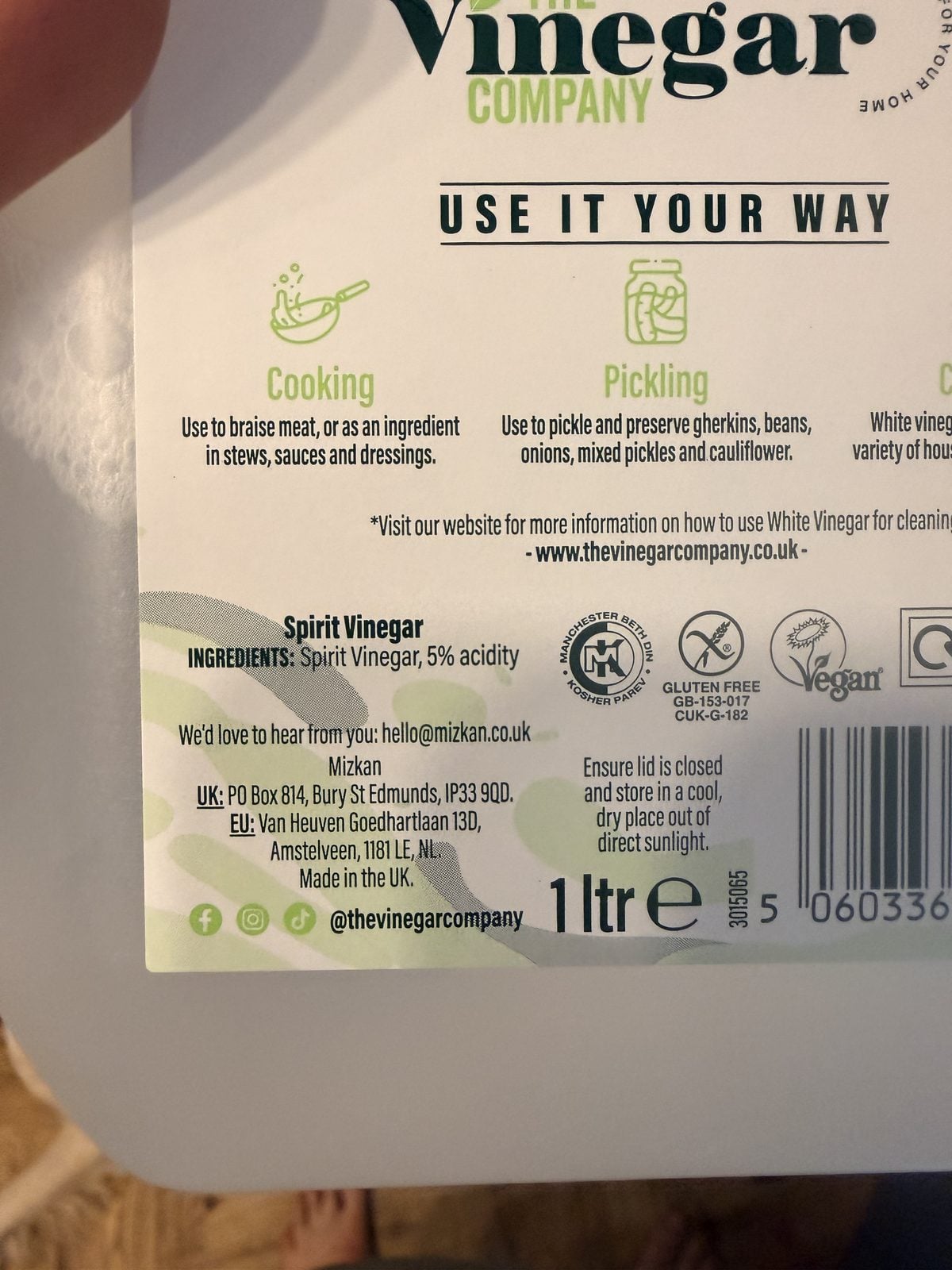
- The label must say 5%. White distilled is a workhorse. White wine and apple cider vinegars are softer and more aromatic.
Seasoning that works per pint:
- Kosher or pickling salt: 1 to 1.5 teaspoons.
- Sugar: 1 to 2 teaspoons, optional, but it rounds the acid.
- Optional extras – Dill always works well, peppercorns and mustard seeds are very commonly used. I sometimes like to add a few red chilli peppers for a bit of fire.
Two details you’ll appreciate later:
- Salt type affects looks. Iodized table salt clouds the brine. For a clear jar, use kosher or pickling salt.
- Vinegar choice tweaks personality. White distilled is clean and sharp. Apple cider or white wine vinegar brings a gentler, fruitier tone.
Safety isn’t optional. Strong acid and cold storage keep these in the safe zone. The pH line for botulism in acidified foods is 4.6, which is why the 1:1 baseline with 5% vinegar is standard for fast refrigerator pickles (Emerging Investigators).
Now the part you’ll actually follow on a Tuesday night.
Step-by-step: One-Pint, 24-Hour Refrigerator Pickled Cherry Tomatoes
Set a timer. You can have this chilling in 15 minutes.
Ingredients (1 pint jar)
- 1 pint cherry or grape tomatoes (12–16 oz), firm
- 3/4 cup vinegar (5% acidity; white distilled, apple cider, or white wine)
- 3/4 cup water
- 1 to 1.5 tsp kosher or pickling salt
- 1 to 2 tsp sugar (optional)
- 2 cloves garlic, sliced or smashed
- 1 strip lemon peel or a few sprigs dill (optional)
- 1/2 tsp whole black peppercorns, and a pinch of chili flakes (optional)
- Optional texture boost: a small pinch of calcium chloride (sold as “Pickle Crisp”)
Method
Wash and dry the tomatoes well. If they’re thin-skinned, chill them for 15 minutes. It reduces splits when warm brine hits.
Pierce each tomato once with a clean needle, skewer, or knife tip. Keep the hole small. A pint takes two minutes.
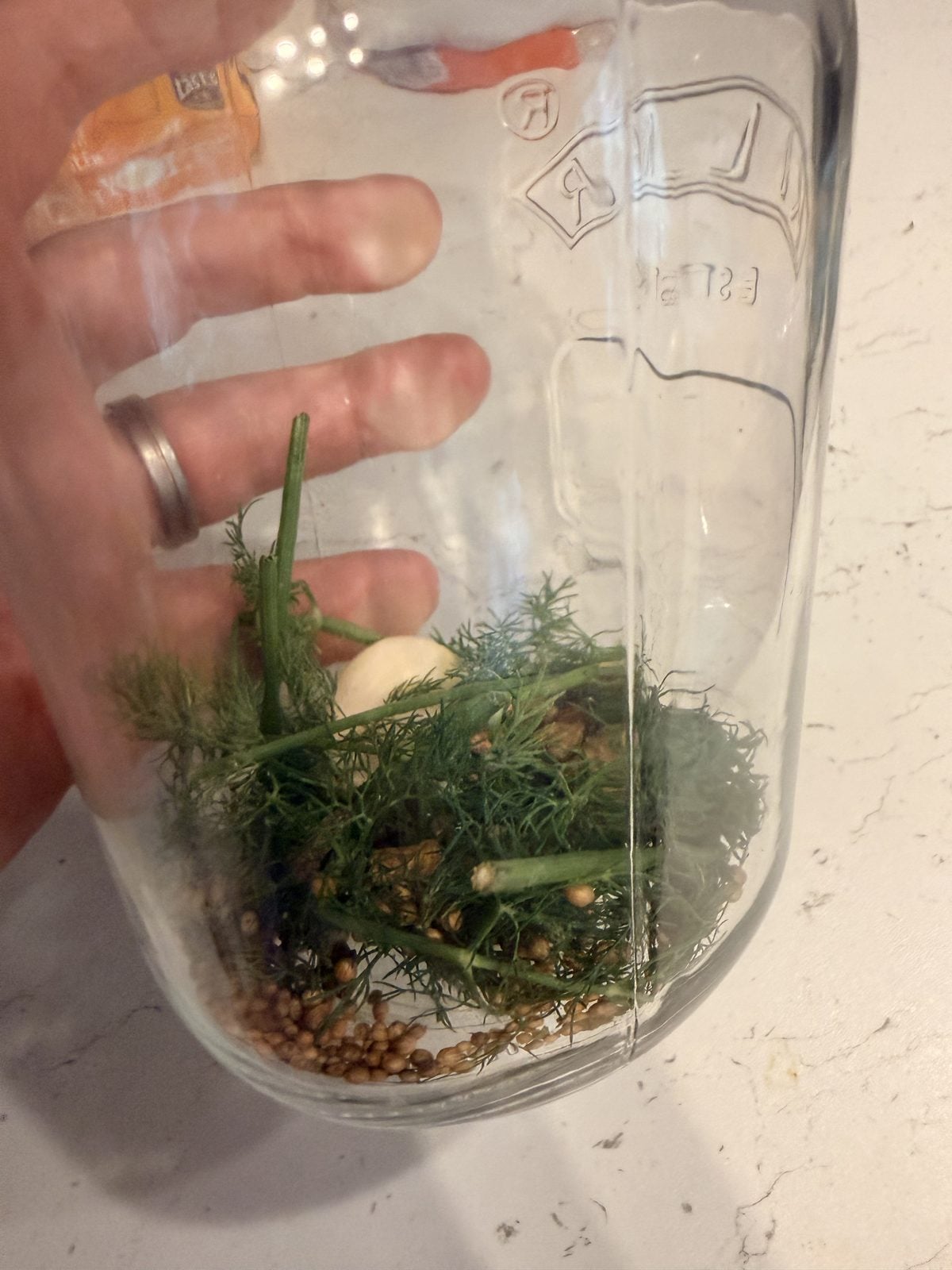
Pack aromatics and tomatoes into a clean preserve jar. If using calcium chloride, sprinkle a small pinch in the jar.
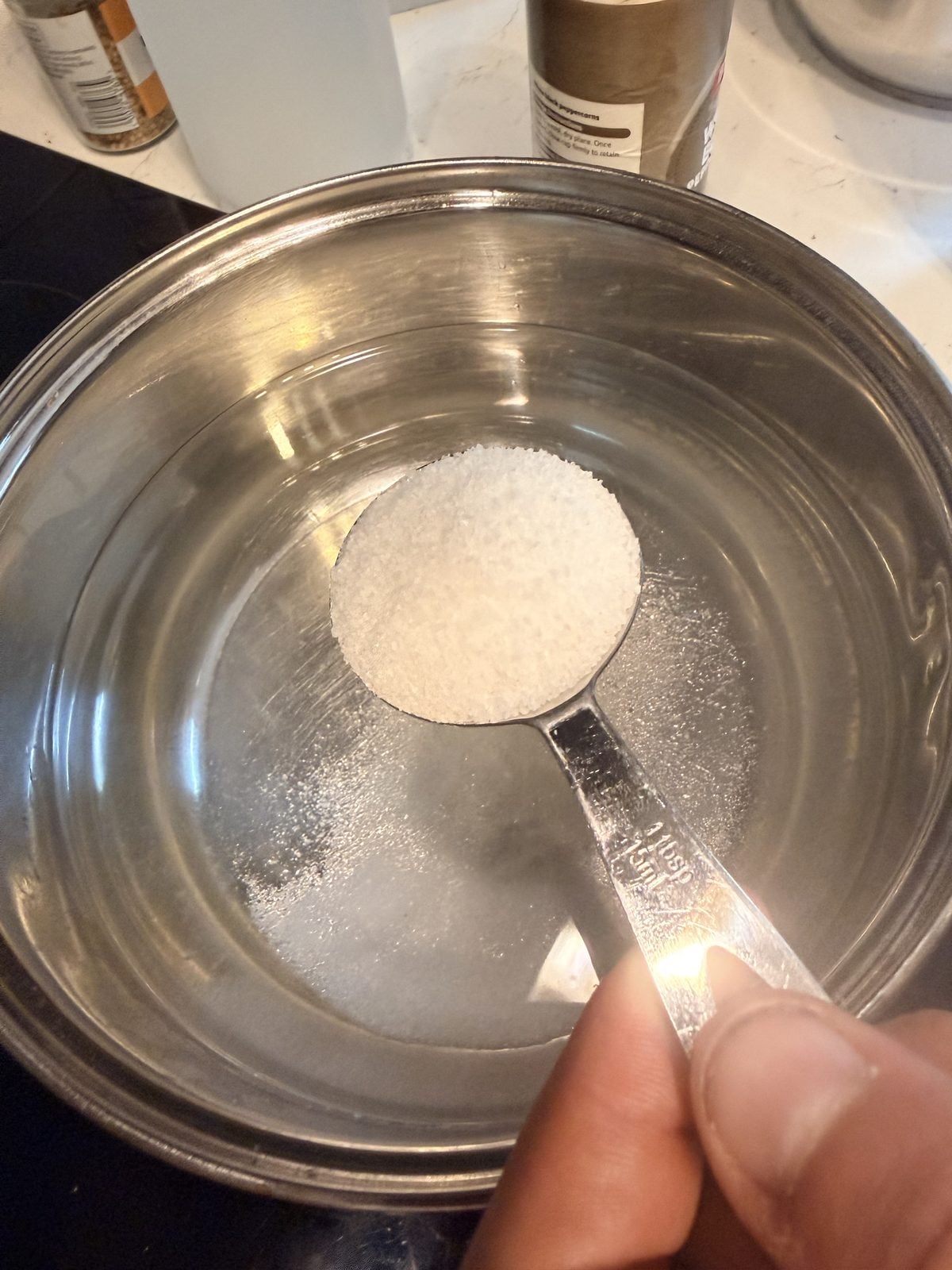
Heat the brine. Combine vinegar, water, salt, and sugar in a small saucepan. Warm just until the salt and sugar dissolve. No rolling boil needed.Pick a temperature:
Thin-skinned cherries, let the brine cool to warm, about 140–160°F.
Thick-skinned grapes or paste-style minis, hot brine works.
Thin-skinned cherries, let the brine cool to warm, about 140–160°F.
Thick-skinned grapes or paste-style minis, hot brine works.
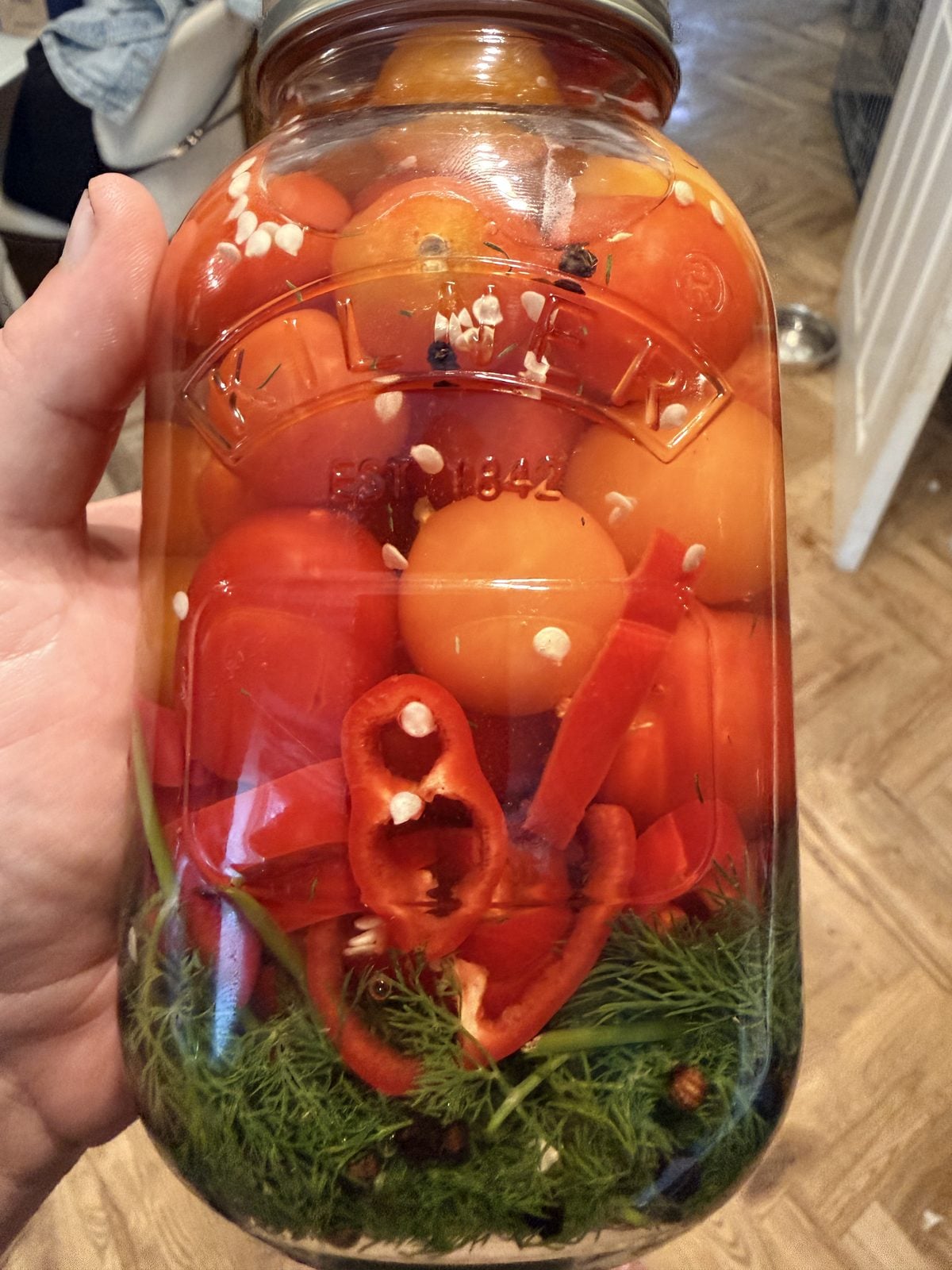
Wait. You can steal one after 8–24 hours. The best texture and flavor balance lands at 48 hours (Emerging Investigators).
Yield: one pint. For a quart, double everything. Notes on shelf life below.
Next up, how to season without making a muddy jar.
Flavor Frameworks That Actually Work
Aromatics make the jar. Keep the ideas focused. Two or three strong notes beat a spice drawer dump.
Mediterranean: lemon, dill, garlic
Why it works: bright acid with herb oils and garlic heat. It belongs next to prosciutto and olives.
Per pint:
- 1 strip lemon peel, yellow zest only
- 3–4 sprigs fresh dill or 1 tsp dried
- 2 cloves garlic, sliced
- Black peppercorns, 1/2 tsp
Apple cider or white wine vinegar shines here. Lakewinds’ dill-and-lemon mix is right in this lane (Lakewinds Co-op).
Serve with:
- Feta, olives, and toasted pita
- Cured meats
- Tuna salad with farro and shaved fennel
One quirk. Garlic sometimes turns blue or green. It’s harmless chemistry between sulfur compounds and acid. Keep it and eat it.
Bloody Mary: brunch heat, savory lift
Why it works: pepper, ginger, chili. A garnish that disappears before the drinks leave the counter.
Per pint:
- 1/2 tsp whole peppercorns
- 1/4–1/2 tsp red pepper flakes
- 6–8 thin slices fresh ginger
- 1/2 tsp celery seed, optional but very on-theme
Use white distilled vinegar for a clean backbone. The heat builds by day three. Great in a Caesar salad instead of croutons. Ridiculous on sourdough with whipped feta.
Three more fast riffs that won’t wreck texture
- Herb Garden: thyme, oregano, a bay leaf. Classic, easy, perfect with roasted chicken and couscous.
- Smoky Chili: a piece of dried chipotle, cumin seeds, lime peel. Swap half the vinegar for white wine vinegar to soften it.
- Garlic-Black Pepper: 3 smashed cloves and 1 tsp peppercorns. Minimalist. It’s the first jar to vanish in my house.
How to avoid muddy flavor. Skip fine powders. They cloud the brine and stick to skins. Whole spices extract cleanly and keep the jar pretty.
One more seasoning note before the practical stuff. Sugar isn’t making these “sweet pickles.” One or two teaspoons per pint just softens the sharp edge so the tomatoes read bright, not harsh.
Common mistakes (and how to fix them)
You learn these once.
- Whole, unpierced tomatoes. Result: bland centers and pop-outs. Fix: pierce every fruit.
- Boiling brine on Sun Golds. Result: wrinkles and soft collapse. Fix: warm brine for thin skins, hot is fine for thicker grapes.
- Iodized table salt. Result: cloudy brine and sometimes a metallic edge. Fix: kosher or pickling salt.
- Not enough acid. Result: dull flavor and real safety concerns. Fix: never go below a 1:1 ratio with 5% vinegar unless following a tested, specific recipe.
- Fishing with fingers. Result: contamination and shortened life. Fix: use a clean fork every time.
- Overstuffed jars with air pockets. Result: uneven flavor and floaters. Fix: tap the jar or slide in a clean chopstick to release bubbles.
- Garlic panic when it turns blue-green. Result: wasted food. Fix: accept the chemistry, it’s safe and tastes the same.
- Expecting shelf-stable jars. Result: trip to the trash, or worse. Fix: fridge only, from start to finish.
Time for the shelf-life reality check. It dictates how far you push the vinegar ratio.
Storage and Shelf Life (pay attention here)
Refrigerator pickles are still interesting to microbes. Acid and cold are your guardrails.
What’s realistic:
- “Best served after 24 hours and up to 2 weeks,” says Our Forever Farm’s tutorial (YouTube). That lines up with top texture.
- Strongly acidic, cooled-brine recipes like Lakewinds’ say “refrigerate for up to two months” (Lakewinds Co-op). Texture softens over time, even when acid keeps it safe.
- Research syntheses flag that in acidified refrigerated pickles, some pathogens can survive for extended periods under certain conditions. So keep the same rules: strong acid, clean jars, cold storage (Emerging Investigators).
My approach:
- I treat two weeks as the quality window. After that, expect softer texture. They still shine in cooked dishes.
- For longer fridge time, I bump to a 3:2 ratio, vinegar to water, pierce meticulously, and add a pinch of calcium chloride. Still fridge-only.
How to store smart:
- Label and date.
- Keep at or below 40°F. The back of the fridge beats the door.
- Use clean utensils. No double-dipping.
- Keep solids submerged. If tomatoes float, add a small clean weight, like a food-safe silicone puck or a tiny zip bag with a bit of extra brine. Air invites mold.
When to toss:
- Visible mold. Slimy brine. Rotten, not vinegary, smell. Lids bulging or hissy after days in the fridge.
- If your eyes or nose balk, trust them. Quick pickles are easy to replace.
If they’re simply soft:
- Don’t waste them. Chop and simmer into a quick pan sauce with butter, shallot, and their own brine. Or blitz into a vinaigrette.
Two more little levers change texture more than you’d think.
Two quiet texture upgrades
- Ripeness matters. Slightly underripe, firm fruit holds better than already-soft, sun-warm cherries. Pick firm. Eat the bursting-sweet ones out of hand.
- Calcium chloride, Pickle Crisp. A tiny pinch per pint reinforces cell walls, keeping that snap closer to day one. No flavor added. Optional for purists, essential if you keep jars longer.
Now build jars that actually disappear from the fridge.
Flavor Frameworks, Built for Use
I want jars that get emptied, not admired. These do.
Mediterranean Pint (herb-and-lemon)
- 3/4 cup 5% vinegar, white wine or apple cider
- 3/4 cup water
- 1–1.5 tsp kosher salt
- 1–2 tsp sugar
- 1 strip lemon peel
- 3–4 sprigs dill
- 2 cloves garlic, sliced
- 1/2 tsp peppercorns
- 1 pint tomatoes, pierced
Make brine. Pour warm for thin skins, hot for thicker. Chill. Serve with grilled fish, or toss with cucumbers and feta.
Reference flavor DNA: Lakewinds’ quick pickles.
Bloody Mary Pint (spice and bite)
- 3/4 cup 5% white distilled vinegar
- 3/4 cup water
- 1–1.5 tsp kosher salt
- 1 tsp sugar, optional
- 1/2 tsp peppercorns
- 1/4–1/2 tsp red pepper flakes
- 1 tsp celery seed, optional
- 6–8 thin ginger slices
- 1 pint tomatoes, pierced
Use as a brunch garnish. Also excellent on a cheeseburger with shredded iceberg.
Reference hot-brine approach: Heartbeet Kitchen pours hot, then refrigerates.
Chili-Lime Pint (weeknight tacos)
- 3/4 cup 5% white distilled vinegar
- 3/4 cup water
- 1 tsp kosher salt
- 1–2 tsp sugar
- 1 strip lime peel
- 1/2 tsp cumin seeds
- 1 small sliver dried chipotle
- 1 pint tomatoes, pierced
Chop and toss with avocado and cilantro. Taco night handled.
Herb Garden Pint (French-leaning)
- 3/4 cup 5% apple cider vinegar
- 3/4 cup water
- 1–1.5 tsp kosher salt
- 1 tsp sugar
- 3 sprigs thyme
- 1/2 tsp dried oregano
- 1 bay leaf
- 1 pint tomatoes, pierced
Great with roast chicken, farro, and a shower of parsley.
All share the same backbone. All worth a repeat.
What most people get wrong (myths vs reality)
Shelf-stable claims pop up often. Refrigerator pickles belong in the fridge, even with strong acid, and clean handling still matters. Every linked recipe stores them cold (Heartbeet Kitchen, Lakewinds, Our Forever Farm).
Boiling brine speeds things up, but thin-skinned tomatoes soften fast under high heat. Many cooks cool the brine before pouring to protect texture (Lakewinds), while others pour hot and eat within a two-week window (Heartbeet Kitchen, Our Forever Farm). Match brine temp to skin thickness.
Skipping the piercing step leaves bland centers and causes bursts. Lakewinds specifically instructs piercing (Lakewinds Co-op). The science angle is about contact time, and contact needs entry points (Emerging Investigators).
Vinegars aren’t interchangeable. You need 5% acidity for the baseline method. Rice wine and flavored vinegars can be lower. Check the label.
A little sugar doesn’t turn it into a sweet pickle. A teaspoon or two rounds the sharpest edges so the tomato reads bright.
You’re now cooking above the average search result. Next up, which tomatoes behave best and how to avoid a mush jar.
Tomato choices and handling notes
- Firm fruit wins. Slightly underripe cherries and grapes hold better than soft, fully ripe fruit.
- Thick-walled grapes tolerate warmer brine without collapse. If your garden gives you both grapes and thin-skinned cherries like Sun Golds, pickle grapes or use warm, not boiling, brine on thin skins and give them more time.
- Chill thin-skinned fruit before pouring brine. Fewer instant splits.
- Always pierce. One hole, two for very firm fruit.
Staring at a mountain of tomatoes? Scale up to a quart or half-gallon and stash two flavor profiles at once.
Scaling up without ruining texture
- Keep ratios exact. A quart jar is double the pint formula. Half-gallon is quadruple.
- Pack gently. Don’t crush the bottom layer. Crushing equals soft spots later.
- Keep everything submerged. Bigger jars float more. Use a clean weight if needed.
- Doing multiple jars? Test one warm and one hot with the same tomatoes. Taste at 24 and 48 hours. You’ll learn your fruit fast and that knowledge lasts all season.
Next, how to use the jar once it tastes right.
How to use them so a jar disappears
- Burrata toast with basil and olive oil. Spoon tomatoes and brine over the top. Black pepper. Done.
- Charcuterie board swap-in. Use these instead of cornichons.
- Chopped in egg salad with chives. The brine brightens mayo like lemon.
- Tossed with couscous, tuna, capers, and parsley. Pantry dinner that tastes like you tried.
- Quick pasta sauce. Sizzle garlic in olive oil, add chopped pickled tomatoes with a splash of brine, butter, and pepper. Toss with noodles and Parmesan.
- Potato salad upgrade. Halved tomatoes folded in at the end. The brine wakes the whole bowl.
- Bloody Mary garnish. Obvious. Correct.
On to the practical questions that decide if you make this twice.
FAQ
How long before I can eat them?
- Snack after 8–24 hours. Most cooks, and the research synthesis, land on about 48 hours for the best balance (Emerging Investigators).
Do I need to sterilize the jar?
- For refrigerator pickles, a very clean jar is usually enough. Wash in hot, soapy water or run through a hot dishwasher cycle and dry. If you’re pushing toward the longer end of fridge life, a month or two in a very acidic brine, sterilizing adds a margin. Lakewinds fills a sterilized jar in their method (Lakewinds Co-op).
Can I use table salt?
- It works, but it can cloud the brine and taste a little off. Pickling or kosher salt dissolves cleanly and keeps liquid clear. If table salt is all you have, use slightly less by volume and expect cloudiness.
Why did my garlic turn blue or green? Is it safe?
- Yes. It’s a harmless reaction between garlic sulfur compounds and acid. Texture and flavor stay the same.
Which vinegar should I use?
- White distilled, 5% acidity, gives a clean, sharp profile and a crystal clear brine. White wine vinegar and apple cider vinegar, also 5%, bring a softer, fruitier edge. All three show up in the linked recipes.
How long do they last?
- Best between 48 hours and two weeks for texture. Our Forever Farm says “up to 2 weeks” for best service window (YouTube); Lakewinds gives “up to two months” refrigerated for their cooled, strongly acidic brine (Lakewinds Co-op). Past two weeks, expect softer texture even when acid keeps them safe.
Can I can these for the pantry?
- Not this recipe as-is. For shelf-stable jars, use a tested hot-water-bath recipe designed for tomatoes or pickles and follow processing times from a trusted source. The methods here are built for the refrigerator.
What if a couple burst in the jar?
- If the brine smells bright and vinegary and nothing is slimy, the batch is still useful. Eat those first and use the rest in salads. To prevent popping next time, pierce fruit, avoid boiling-hot brine on thin skins, and chill tomatoes first.
I want maximum crunch, anything else I can do?
- Start with firm fruit. Use warm, not boiling, brine for thin skins. Add a tiny pinch of calcium chloride. Eat them in the first two weeks.
Now, the part that turns this into a two-for-one project.
Don’t dump the leftover brine
That liquid holds tomato essence, garlic, chile, lemon oils. Real flavor.
Use it:
- Whisk into vinaigrettes. Three parts olive oil to one part brine makes a fast, perfect dressing.
- Deglaze a pan after searing chicken. Add a knob of butter and pepper. Spoon over the meat.
- Splash into a Bloody Mary. Free complexity.
- Quick marinade for shrimp. Ten minutes. Grill. Serve with the pickled tomatoes.
About to pour it out? Taste a spoonful first.
A quick side-by-side: warm vs hot brine
If you like a test, try this once:
- Two identical pint jars with the same tomatoes and seasonings.
- Fill one with warm brine, about 150°F. Fill the other with hot brine, just off a simmer.
- Taste at 24 and 48 hours.
Take notes on texture and flavor. With your tomatoes, that’s the truth that matters. Internet recipes don’t know your skins or your kitchen temp. You do.
Real-world examples you can trust
- Lakewinds’ method: boil to dissolve, cool, pierce tomatoes, load dill, garlic, lemon, then refrigerate. They say “up to two months” chilled (Lakewinds Co-op).
- Heartbeet Kitchen: hot brine, quick to the fridge, and a list of ways to eat them that’ll get you cooking, polenta, pasta, toast (Heartbeet Kitchen).
- Our Forever Farm: a video walk-through with a white wine vinegar brine and the line quoted earlier, “Best served after 24 hours and up to 2 weeks” (YouTube).
Cross-check a few credible, specific recipes to lock in your baseline. Then riff.
The science bite (no lab coat required)
- Acid rules the day. 5% vinegar at a 1:1 mix with water keeps these strongly acidic, below the 4.6 pH threshold that matters for botulism risk in acidified foods (Emerging Investigators).
- Time counts. Penetration starts fast, but best equilibrium in the center shows up around 48 hours (Emerging Investigators).
- Temperature is a texture lever. Hotter brine moves faster but softens thin skins. Cooler brine protects structure and needs more time. That’s why you see both approaches in winning recipes, cooled brine at Lakewinds, hot at Heartbeet Kitchen.
This is enough science to keep your jar safe and good.
Troubleshooting oddities in the jar
- White sediment on the bottom, usually undissolved salts or spices settling out. If the brine smells bright and clean and nothing is slimy, it’s fine.
- Slight cloudiness can come from garlic, spices, or table salt additives. Use kosher or pickling salt next time for clarity.
- Blue-green garlic, harmless chemistry. Keep it.
- Floaters, tomatoes bob. Keep them submerged with a clean weight or a snug pack.
If anything looks truly off, fuzzy growth, slick films, rotten smell, toss it. Don’t taste to test.
A small story with a big lesson
Last August, I made two jars after a Sun Gold surge. Jar one used boiling brine and no piercing because I was in a rush. It looked great at bedtime. By morning, a red puddle and empty skins.
Jar two had warm brine, every fruit pierced, and a pinch of calcium chloride. That jar held its snap for the full two-week quality window. Half went on ricotta toast. The rest into a Friday pasta pan sauce with butter and black pepper. Same tomatoes. One small step changed the outcome.
You only need the mush jar once to switch your habits.
Your 5-minute recap
- Pierce every tomato. No hole, no flavor.
- Use 5% vinegar and keep the 1:1 baseline. It’s safe and tastes right (Emerging Investigators).
- Match brine temp to skin thickness. Warm for thin skins, hot is fine for thick skins.
- Eat between 48 hours and two weeks for best texture, backed here (YouTube). Strongly acidic recipes can go longer chilled, see Lakewinds (Lakewinds).
- Keep it cold, always.
Still staring at a basket? Make two jars with different flavor frameworks. Taste them side by side at 48 hours. Then pull up a few more ideas, quick-pickled cucumbers for sandwich nights, or pickled red onions for tacos. Your fridge is about to get interesting.